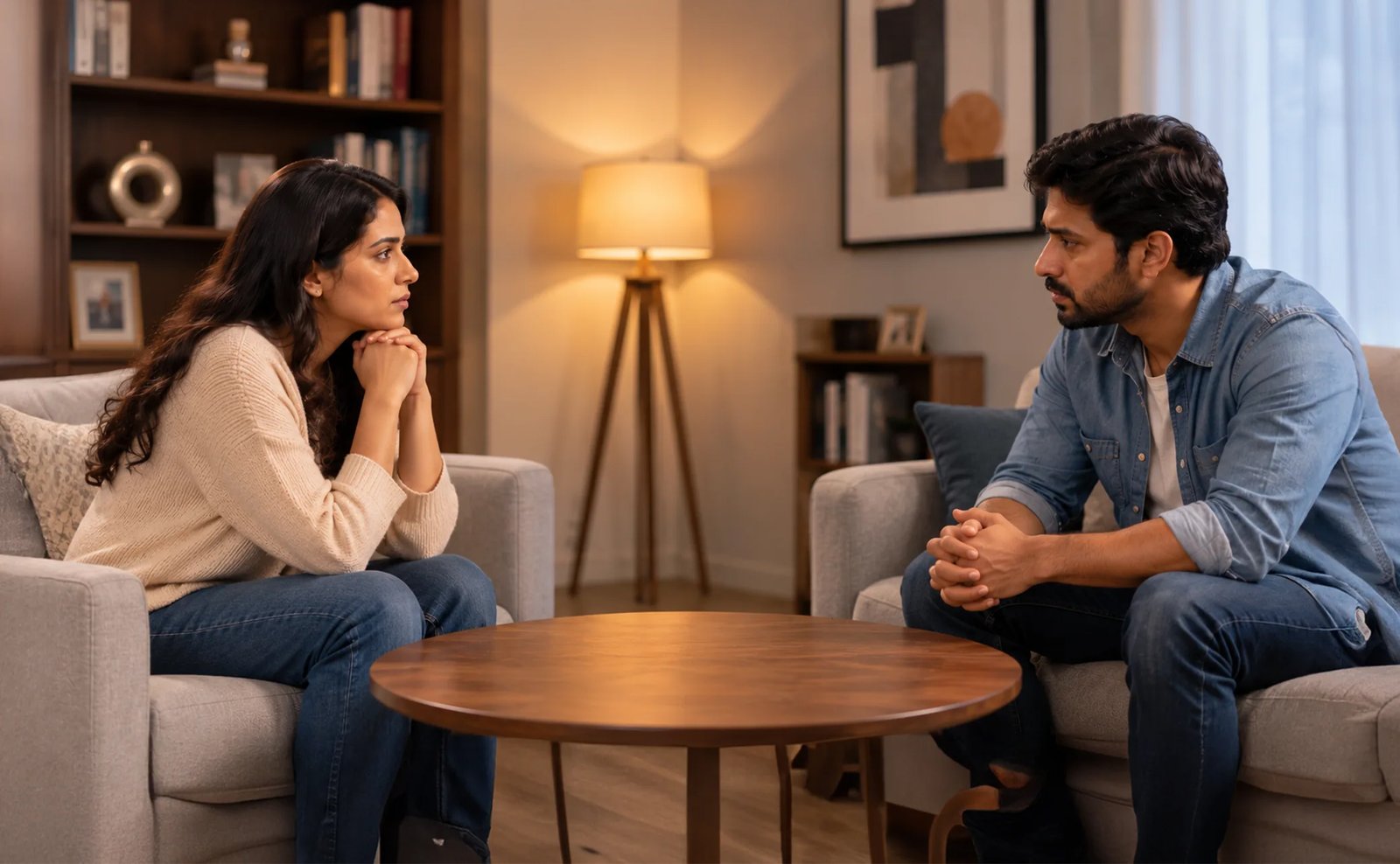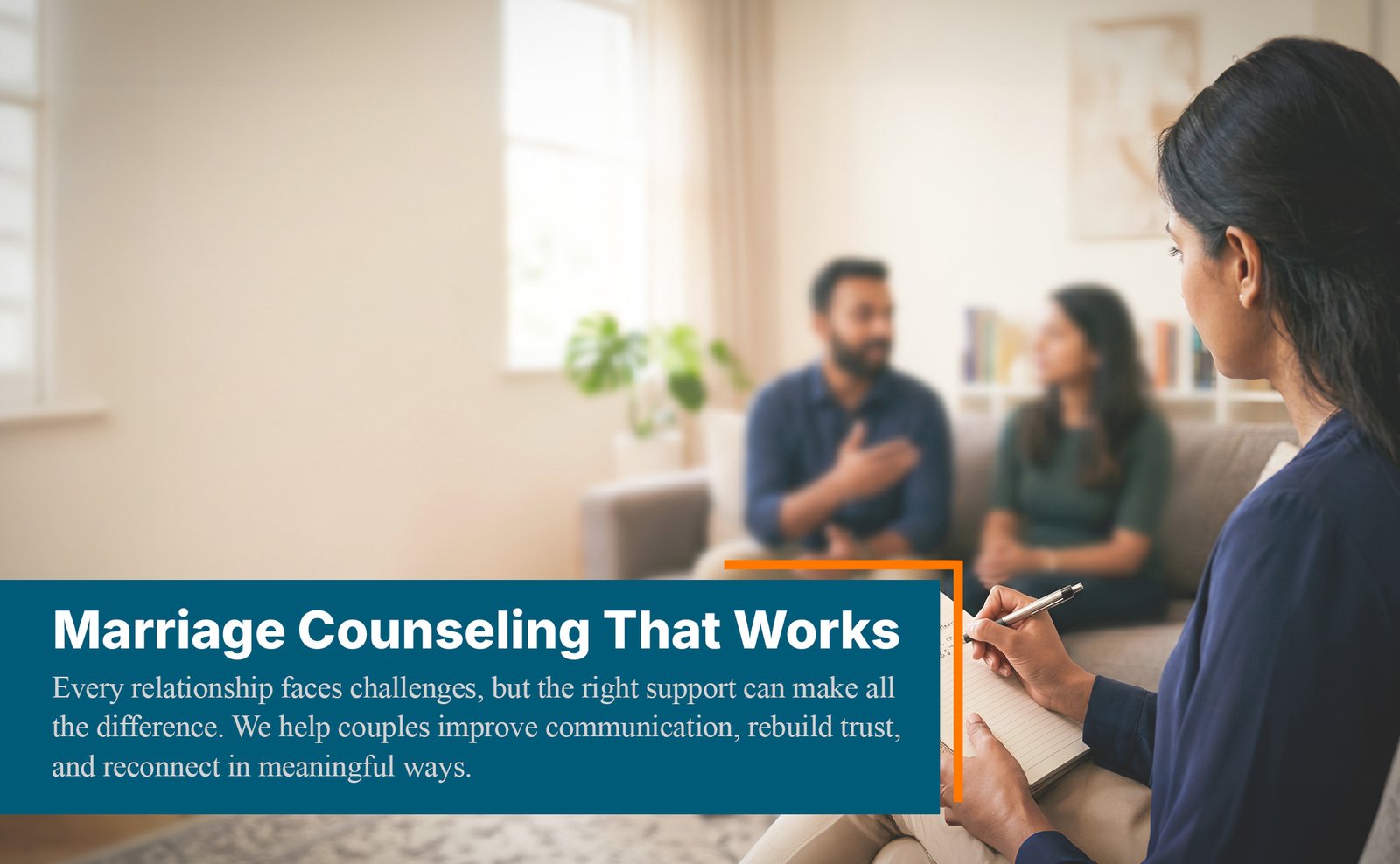
No relationship begins with the expectation that it will become difficult. Most couples start with a sense of ease, as conversations flow, differences feel manageable, and being together feels natural. But over time, life adds layers. Responsibilities grow. Stress builds. Communication shifts.
And slowly, without anyone intending it, distance begins to form.
This is often the point where many couples start considering marriage counselling. Not because the relationship is broken, but because something important feels harder than it used to be.
A good couples therapist doesn’t just listen to problems. They help you understand patterns like how small moments turn into recurring conflicts, how silence replaces conversation, and how both partners begin to feel unheard in different ways.
What makes marriage counselling work is not advice. It’s awareness.
It’s not about the issue; it’s about the pattern
Many couples come into sessions thinking their problem is specific.
- “We argue about time.”
- “We don’t agree on priorities.”
- “We keep having the same fight.”
But when you look closely, the issue is rarely the issue.
In many cases, conflicts are not about needs. Rather, they are about how those needs are expressed. A simple expectation like wanting more time together can slowly turn into a demand. And once that shift happens, the tone of the relationship changes.
Expectations are natural. They are part of being human. But when expectations become rigid, they start sounding like conditions: “You have to behave in a certain way for me to feel okay.”
That is where emotional safety begins to decrease. This is where marriage counselling starts to create clarity. It helps couples move from pressure to expression and from control to connection. Instead of demanding change, partners begin to communicate needs in a way that invites understanding.
When conflict turns personal
Another pattern that quietly damages relationships is the shift from the issue to the person.
Instead of saying,
“You forgot to call.”
it becomes,
“You are careless.”
This may feel like a small change in wording, but its impact is significant. Repeated personal criticism affects respect. And once respect starts to weaken, even small disagreements begin to feel heavier than they should.
A simple principle often helps here: address the behaviour, not the character.
Around this stage in the process, a skilled v helps couples slow down their reactions. Not to avoid conflict, but to handle it differently. To recognise the difference between expressing frustration and attacking identity.
Respect does not mean agreement. It means choosing how you disagree.
Feeling distant from your partner?
Learn to communicate better and rediscover passion in your relationship.
Book an AppointmentUnderstanding what’s beneath the argument
Many arguments that couples have on the surface are rarely about what they seem.
A disagreement about time might actually be about feeling unimportant.
An argument about tone might reflect a deeper need for respect.
Silence might not be indifference, and it could be emotional withdrawal.
Without understanding what sits beneath these reactions, couples often end up repeating the same cycles. This is where structured couples therapy becomes useful. It creates space to explore not just what is being said, but what is being felt. And more importantly, what is not being said at all.
When couples begin to recognise these deeper layers, something shifts. Conversations become less reactive. Listening becomes easier. And emotional connection, which once felt distant, starts to feel possible again.
Progress is often quiet, not dramatic
One of the biggest misconceptions about therapy is that change should be immediate and visible. In reality, progress is usually subtle. It might look like:
- Pausing before reacting
- Expressing a need without blaming
- Listening without interrupting
- Recognising a pattern before it escalates
These are small changes. But they are not insignificant. Over time, these moments start to reshape how a relationship functions. Effective marriage counselling focuses on these shifts. It doesn’t promise perfection. It helps build awareness, consistency, and emotional stability.
Why the right support matters
Not every couple needs the same kind of support. And not every stage of a relationship requires the same approach. Some couples come early, when conflicts are still manageable. Others reach out after years of distance. Both situations are valid.
What matters is not when you start, but how you approach the process.
If you are considering support, finding a marriage counsellor in Delhi who understands both individual emotions and relationship dynamics can make a significant difference. The work is not just about solving problems. It is about understanding how those problems formed in the first place.
The work behind strong relationships
There was a time when people believed relationships should naturally sustain themselves. Today, the reality is clearer. Relationships require attention. Not constant effort, but consistent awareness. They are shaped in everyday behaviour, like how partners speak, respond, listen, and repair after disagreements.
This is something we see regularly at Talk n Share, where Dr. Sangeeta Gupta works closely with couples navigating these exact challenges. The focus is not on assigning blame, but on helping both individuals understand their role in the relationship dynamic.
Because ultimately, the goal is not to avoid conflict. It is to handle it in a way that does not damage the relationship.
Marriage counselling that actually works
So what makes marriage counselling effective? Not just techniques. Not just sessions. It’s the willingness to look inward. So, they can recognise patterns without defensiveness and express needs without control. The couple must listen, even when it feels uncomfortable.
And most importantly, to stay engaged in the process. When both partners begin to do this, even imperfectly, the relationship starts to feel different. It feels more real, understood, and stable. And that’s where meaningful change begins.