Online Therapy in India is slowly becoming a more accessible way for people to seek mental health support irrespective of their location. According to the Press Information Bureau, Government of India, the national Tele-MANAS programme had handled more than 34.34 lakh calls as of March 2026 since its launch in October 2022.
While Tele-MANAS is a mental health helpline rather than private therapy, this growing usage reflects the increasing demand for confidential and location-independent mental health support across India.
That kind of volume tells you something: this isn’t a passing trend; it’s a genuine shift in how Indians are choosing to look after their mental health.
But growth in numbers doesn’t answer the question most people actually have: will a video call work as well as sitting across from someone in a room? That’s what this blog digs into, section by section, so you can decide with your eyes open.
People Also Ask
Is online therapy as effective as in-person therapy?
Yes, for most common concerns such as anxiety, stress, relationship issues research shows similar outcomes in both formats when sessions are consistent.
Is online counselling safe and confidential in India?
Yes, reputed practices use encrypted platforms and follow strict confidentiality protocols, similar to safeguards used in in-person clinical settings. At Talk n Share, your consultation is 100% confidential.
What Online Therapy in India Actually Looks Like Now
Five years ago, video counselling in India was mostly a pandemic workaround. That’s changed. Clinics now run structured online programmes with the same intake process, the same session length, and often the same therapist a client would see in person. A working professional in Gurugram can have a session during a lunch break. A homemaker in a smaller town can talk to a relationship counsellor without arranging travel or childcare.
What hasn’t changed is the core of the work itself. A good session, online or offline, still depends on the therapist listening carefully, asking the right questions, and building enough trust that a client says what’s actually bothering them, not just the polished version of it.
Effectiveness: Does Video Counselling Work As Well As In-Person Sessions?
This is the question everyone actually wants answered, so let’s be direct about it. For issues like anxiety, everyday stress, mild depression, and relationship friction, most clients see similar progress whether they’re on a screen or in a chair across from their counsellor. The therapeutic relationship, not the medium, tends to be the bigger predictor of how well counselling works.
There are limits, though. Clients dealing with severe psychiatric symptoms, active self-harm risk, or situations that need close, in-person observation are usually better served by face-to-face care, at least initially. A screen can’t always catch the small physical cues a trained eye picks up in a room.
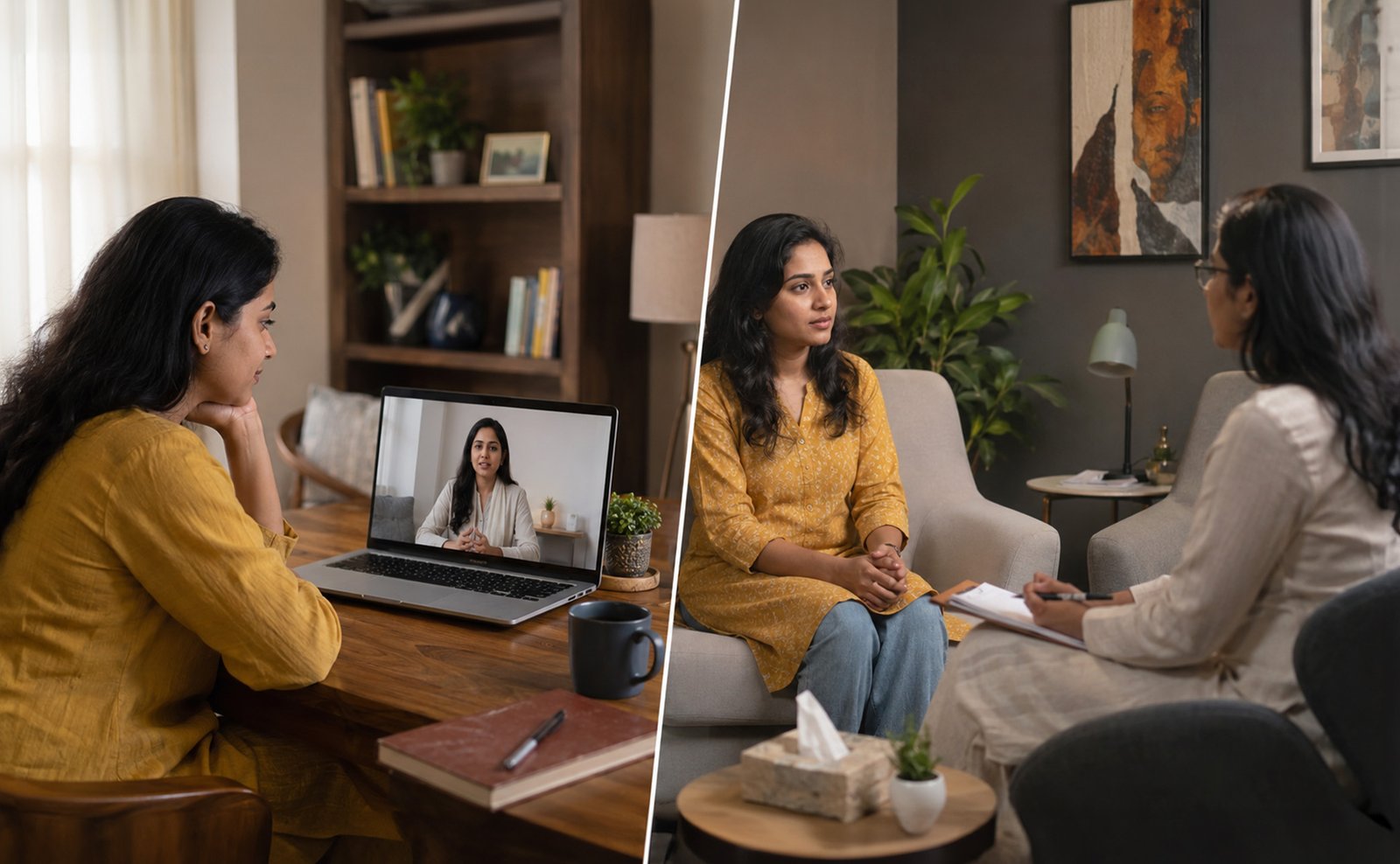
Online Therapy vs In-Person Therapy: Quick Comparison
| Factor | Online therapy | In-person therapy |
| Convenience | Attend from home or another private location | Requires travel and fixed appointments |
| Access | Useful for people outside major cities | Limited by the availability of nearby professionals |
| Privacy | Avoids being seen entering a clinic. Provides a private space away from home | Provides a private space away from home |
| Non-verbal communication | Some physical cues may be harder to notice | Therapist can observe more in-room behaviour |
| Best suited for | Stress, anxiety, relationship support and regular follow-ups | Higher-risk concerns, close observation and some child-focused approaches |
| Technology | Requires a stable connection and private device | Does not depend on internet quality |
Cost, Access and Everyday Practicality
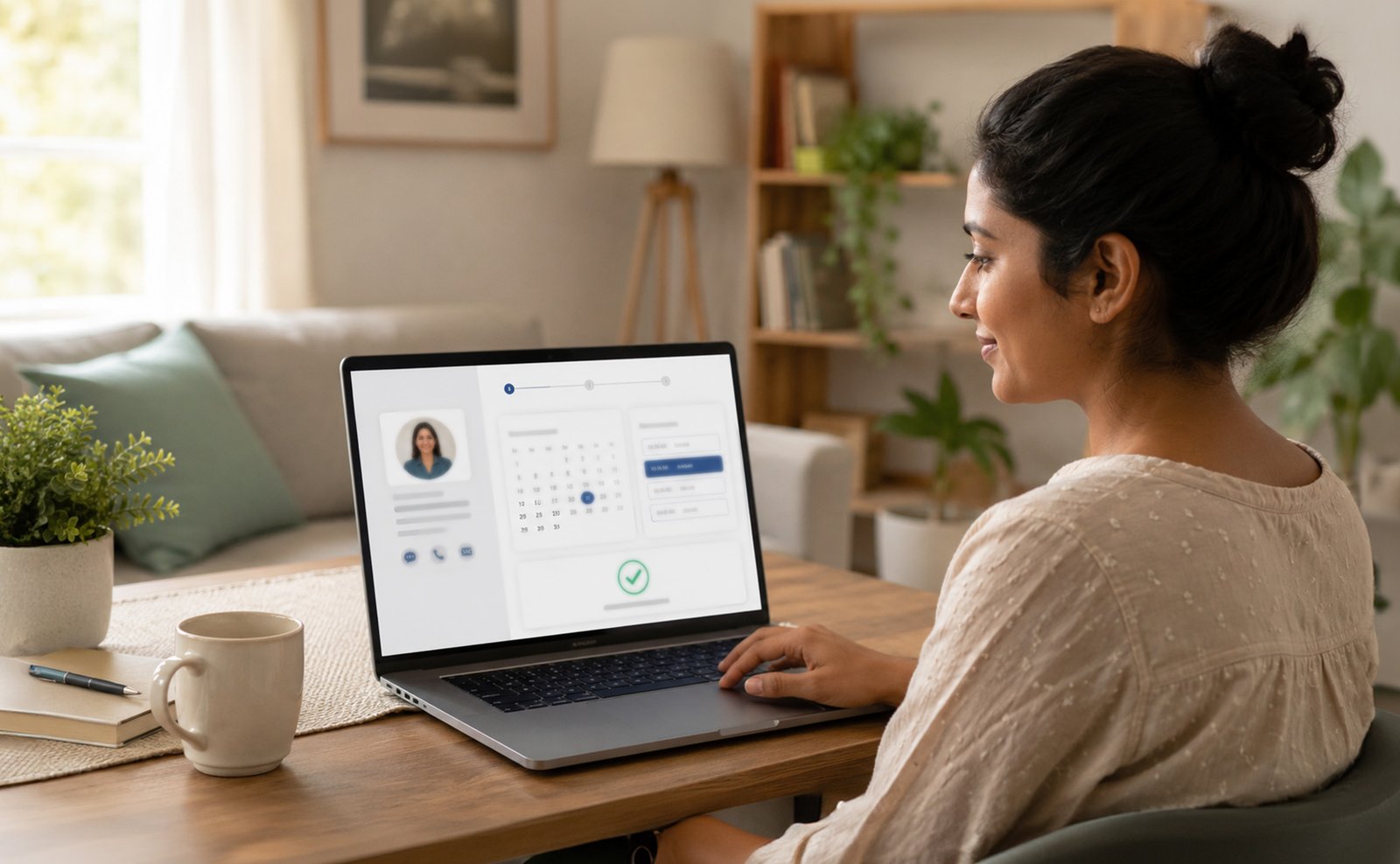
Here’s where online sessions pull ahead for a lot of people. There’s no commute, no traffic, no taking half a day off work for a 60-minute appointment. For someone juggling a job, a commute, and family responsibilities, that difference in friction is often what decides whether they actually show up for counseling consistently, or quietly drop off after two sessions.
Online counselling in India has also opened the door for people in tier-2 and tier-3 cities who previously had almost no access to trained mental health professionals. A qualified counsellor in Delhi can now work with a client in Ranchi or Nagpur without either party needing to travel.
Privacy, Comfort and What Actually Helps People Open Up
There’s a quieter reason online sessions have taken off: privacy. In many Indian households, therapy still carries a stigma, and simply being seen walking into a counsellor’s office can feel like a bigger hurdle than the therapy itself. A session from a private room at home removes that visibility problem entirely.
Dr. Sangeeta Gupta, founder of Talk n Share, says: “I’ve had clients tell me they finally opened up during a video session because they weren’t worried about being recognised in a waiting room. The comfort of a familiar space sometimes gets people talking faster than a formal office ever could.”
Some clients concentrate better away from home distractions, and for them, a dedicated in-person space is what actually helps them focus and open up.
Not sure which counselling format works best for you?
If you're going back and forth between online and in-person sessions, connect with Dr. Sangeeta Gupta at Talk n Share for confidential therapy sessions. Online and in-person sessions available across Delhi-NCR.
Book AppointmentWhen In-Person Sessions Still Win
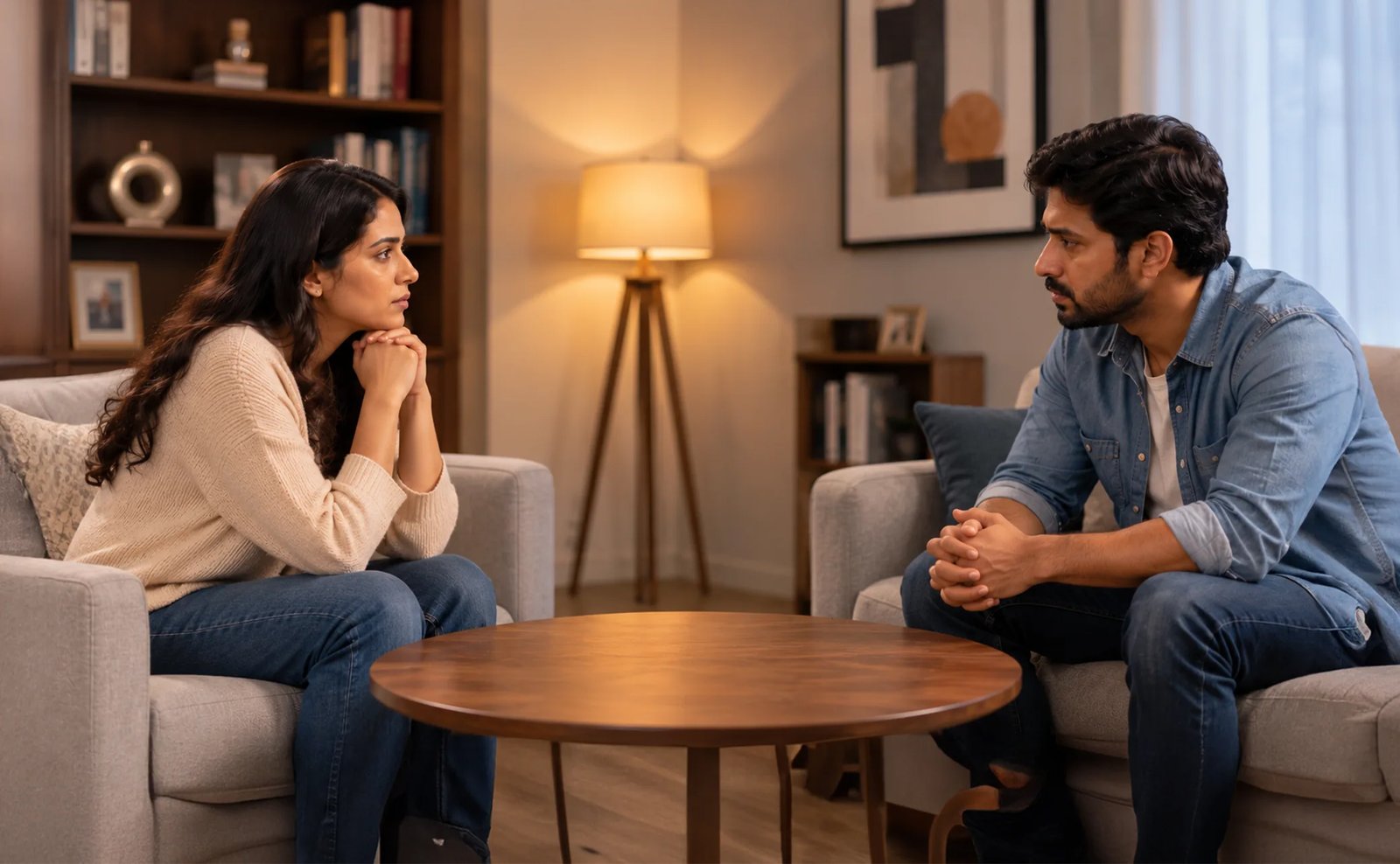
Online isn’t the answer for everyone, and it shouldn’t be treated as one. Couples working through a serious trust breach sometimes need the physical presence of a mental health counselling professional to manage tension in the room in real time. Children and younger clients often respond better to in-person formats where play-based or observational techniques are part of the process. And for clients who simply find it hard to concentrate on a screen, sitting in a quiet office without notifications buzzing nearby can make a real difference to how much they absorb from a session.
Making the Choice: A Practical Framework
Instead of picking a side, it helps to ask three questions. First, what am I dealing with: everyday stress or something more severe that needs closer clinical attention? Second, what’s realistically going to get me to show up consistently: a video call from my desk or a scheduled visit to an office? Third, do I concentrate and open up better at home, or does a dedicated space help me focus?
There’s no wrong answer here. Relationship counselling online has proven itself as a legitimate, effective option for a huge range of concerns, but it’s a tool, not a rule. The right format is simply the one you’ll actually stick with.
Conclusion
The debate between online and in-person therapy isn’t really about which one wins. It’s about matching the format to the person and the problem. Indian therapy seekers now have a genuine choice, and that choice itself is progress, because for years, geography and stigma decided for people who never got a say.
If you’re weighing your options and want guidance on what might suit your situation, this may be the right time to take that first step. Contact us today to begin your counselling journey.
Frequently Asked Questions
Q1. Is online therapy in India legally and clinically recognised?
Yes, qualified mental-health professionals can provide appropriate services remotely, but the applicable professional requirements depend on their qualifications, registration and scope of practice. Before booking, check the practitioner’s credentials and ask about consent, confidentiality, record keeping and emergency procedures
Q2. How do I know if I need in-person therapy instead of online sessions?
If you’re dealing with anxiety, severe symptoms, or a situation needing close observation, an in-person session is usually the safer place to start. Many couples find it easier to schedule joint sessions online as it removes the need to coordinate travel for two people.
Q3. Can online counselling help couples and relationship problems?
Yes, online sessions often work just as well for daily stress, anxiety, or relationship issues. It works especially well for early relationship issues and for maintaining connection between more intense sessions.
Q4. Can I switch between online and in-person sessions with the same counselor?
Yes, and many clients do just that. It is common to begin online for convenience and then move to in-person sessions during a more intense phase, or vice versa, depending on your life situation.