Trust rarely breaks in one moment. It usually wears down slowly, through small lies, missed calls, guarded phones, or one big betrayal that never got properly addressed. And once it’s gone, most couples don’t know how to get it back on their own. That’s where Relationship Counselling for Trust Issues comes in. It gives partners a structured, guided way to understand what broke, why it broke, and how to rebuild something steadier than before.
If you’ve been searching for a relationship counsellor because trust has become the elephant in the room, you’re not alone, and you’re not without options.
People Also Ask
What is the average cost of relationship counselling?
In India, sessions typically cost ₹800–₹3,000. Talk n Share charges ₹1,800 for a 60-minute individual session and ₹2,800 for a 90-minute couple’s session.
How long do typical relationship therapy programs last
Most programs run 8–20 weekly/biweekly sessions (60–90 minutes each); short-term issues may resolve in 6–12 sessions, while complex concerns can extend 6+ months.
Why Do Trust Issues Actually Happen Between Partners?
Trust issues rarely come from nowhere. Sometimes it’s infidelity. Sometimes it’s smaller things that pile up: broken promises, secrecy about money, inconsistent behaviour, or one partner feeling constantly monitored or doubted. Past relationships and childhood experiences play a role too. If someone grew up in a home where trust was violated, they often carry that guardedness into adult relationships, even ones that are otherwise healthy.
What makes this tricky is that trust issues don’t always look like trust issues. They can show up as jealousy, constant reassurance-seeking, snooping through a partner’s phone, or emotional withdrawal. Couples often fight about the surface issue (a late text reply, a forgotten dinner) without realising the real issue underneath is a fear of being betrayed again.
Can Relationship Counselling For Trust Issues Actually Work?
This is the question most couples ask before they even book a session, and it’s a fair one. The honest answer is that counselling works when both partners genuinely want to repair the relationship, not just end the conflict.
A structured process helps because it slows things down. Instead of the same argument on repeat, a counsellor creates space for each partner to say what actually hurt, without it turning into a blame match. Over time, this rebuilds what therapists call “emotional predictability”: the sense that your partner’s words and actions match up consistently.
According to Dr. Sangeeta Gupta, Founder of Talk n Share, “Trust doesn’t return because someone says ‘I’m sorry’ once. It returns when both partners show up consistently, session after session, and prove through small actions that things have genuinely changed”.
Not sure where to start when trust feels broken?
If trust has become the hardest part of your relationship, a first conversation with a professional can help you see the way forward. Contact Talk n Share Today.
Book AppointmentWhat Does A Trust-Building Counselling Session Actually Look Like?
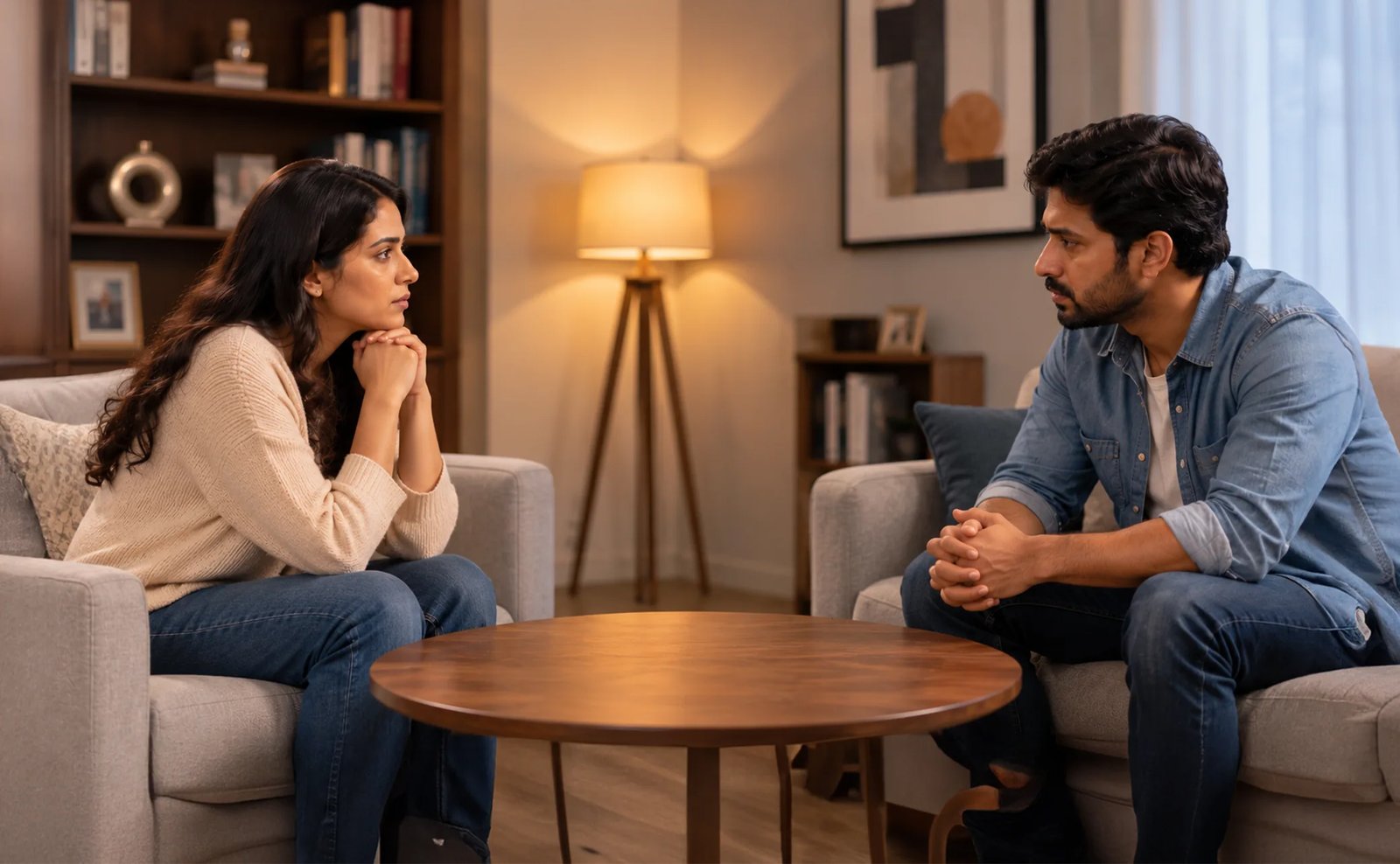
A lot of people picture counseling as one partner venting while the other sits quietly and takes it. That’s not really how it works. A structured session usually involves both partners speaking, guided questions from the counsellor, and specific exercises around honesty, active listening, and accountability.
For couples working with a Relationship Counsellor, Pitampura residents (or anyone across Delhi-NCR) can visit in person; sessions often include:
- Identifying the specific event or pattern that broke trust
- Understanding each partner’s emotional response without interruption
- Setting realistic, mutually agreed boundaries going forward
- Practising transparent communication instead of avoidance or defensiveness
None of this happens in a single session. It’s a process, and a slow one at that. Couples who expect an instant fix often get frustrated. Couples who commit to the process usually see real movement within a few weeks.
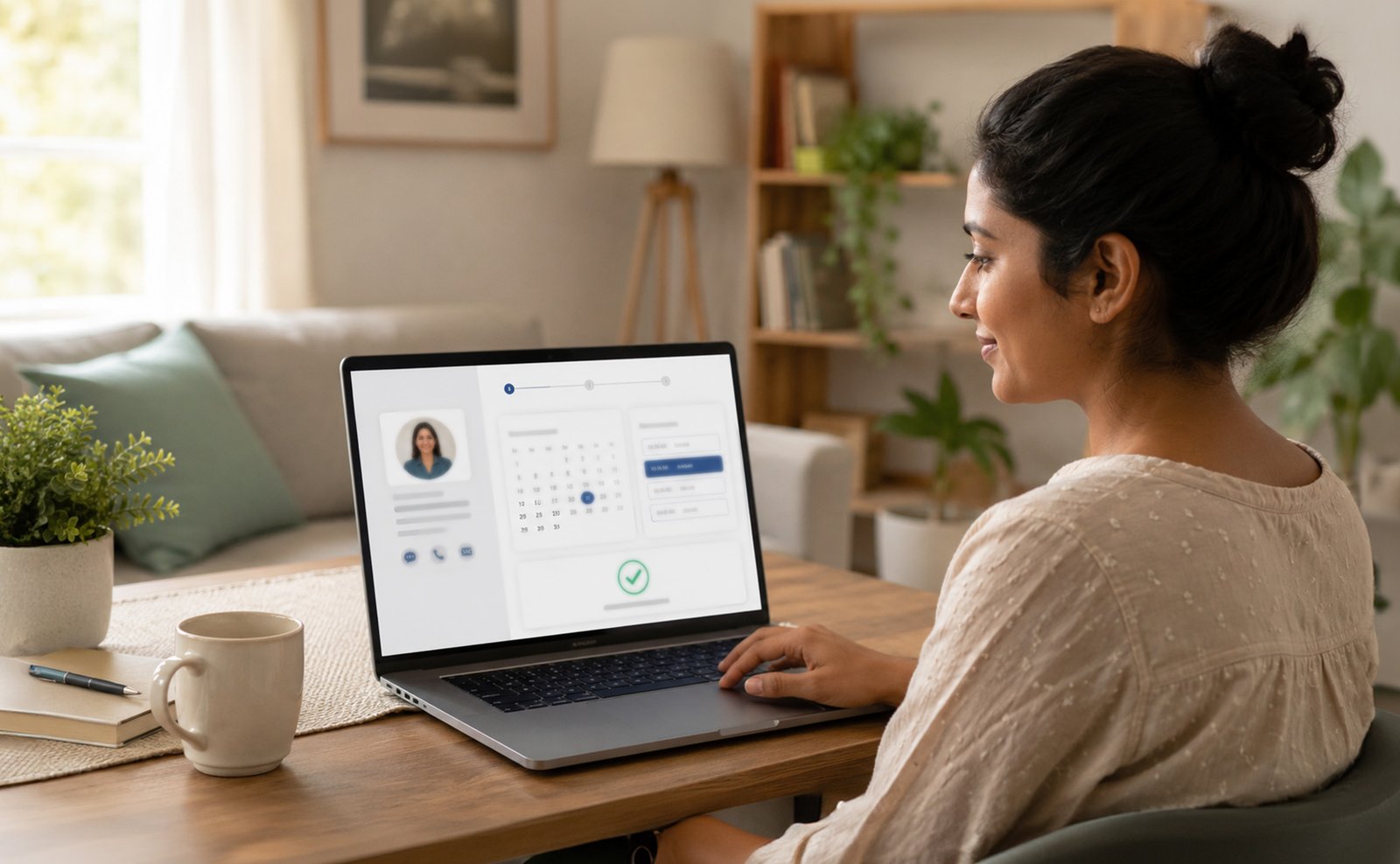
Is Online Couples Therapy Effective For Rebuilding Trust?
This is a question that is often asked, considering the busy schedules that working couples have, especially in Delhi-NCR. And yes, Online Couples Therapy can be as effective as face-to-face sessions for most issues of trust. What matters more than format is the consistency and honesty during sessions.
Online sessions also remove some of the awkwardness couples feel walking into a physical office together, which can actually make it easier to open up in the early stages. For couples juggling work, travel, or living in different parts of the city, online therapy simply makes consistent attendance more realistic, and consistency is what rebuilding trust depends on.
When Should Couples Consider Marriage Counseling For Trust Issues?
Not every trust issue needs professional help immediately. But if you notice the same argument resurfacing every few weeks, if one partner has stopped being honest about small things out of fear of conflict, or if a major breach (like infidelity) has occurred, this is usually the point where Marriage Counseling becomes genuinely useful rather than optional.
Waiting too long often makes things harder, not easier. Resentment builds quietly, and by the time couples do seek help, both partners are often exhausted from carrying the weight alone.
Final Takeaway
Trust breaks slowly, and it rebuilds slowly too. Counselling doesn’t erase what happened, but it gives couples a structured, honest space to understand it, talk about it without it turning into a fight, and slowly prove to each other that things can be different. It takes patience from both sides, but it’s genuinely one of the most effective ways to repair a relationship that still has something worth saving.
If you’ve been thinking about relationship counselling, this may be the right time to take that first step. Contact us today to begin your relationship counselling journey.
Frequently Asked Questions
- Does relationship counselling really help after infidelity?
Yes, it works, but it depends more on the couple than on the counselling itself. If both partners are willing to sit with the discomfort and be honest, yes, it helps. Counselling won’t erase what happened, but it gives you a real process for deciding what comes next instead of looping the same fight for months.
- How many sessions does it usually take to see progress?
Some couples feel a shift in 4 or 5 sessions. Infidelity or long-term dishonesty usually takes longer, sometimes several months of steady work before trust genuinely settles.
- Can one partner attend counselling alone if the other refuses?
Yes, and it’s more useful than people expect. You can’t force your partner into a room, but working on your own patterns, how you react, what you tolerate, what you actually need, often shifts the relationship anyway. Sometimes that’s what brings the other partner in eventually.
- How do I choose a good relationship counsellor online?
Check real qualifications and couples-specific training, not just a polished bio. If they’re a Clinical Psychologist, verify registration. Look for EFT or Gottman-informed experience, plus clarity on confidentiality, fees, and how online sessions run.
- What happens during a first relationship counselling appointment?
The first session is mostly your counsellor getting a clear picture of what’s been happening, how long, and what each of you actually wants out of this. You won’t be pushed to fix everything on day one. It’s more about feeling comfortable enough to keep coming back.
- What are the benefits of seeking professional relationship help?
Couples often assume they need a crisis to justify counselling. They don’t. A good counsellor helps you catch the patterns you keep repeating, gives you a way to talk without it turning into a fight, and hands you tools that outlast the sessions themselves. That last part matters more than people realise.